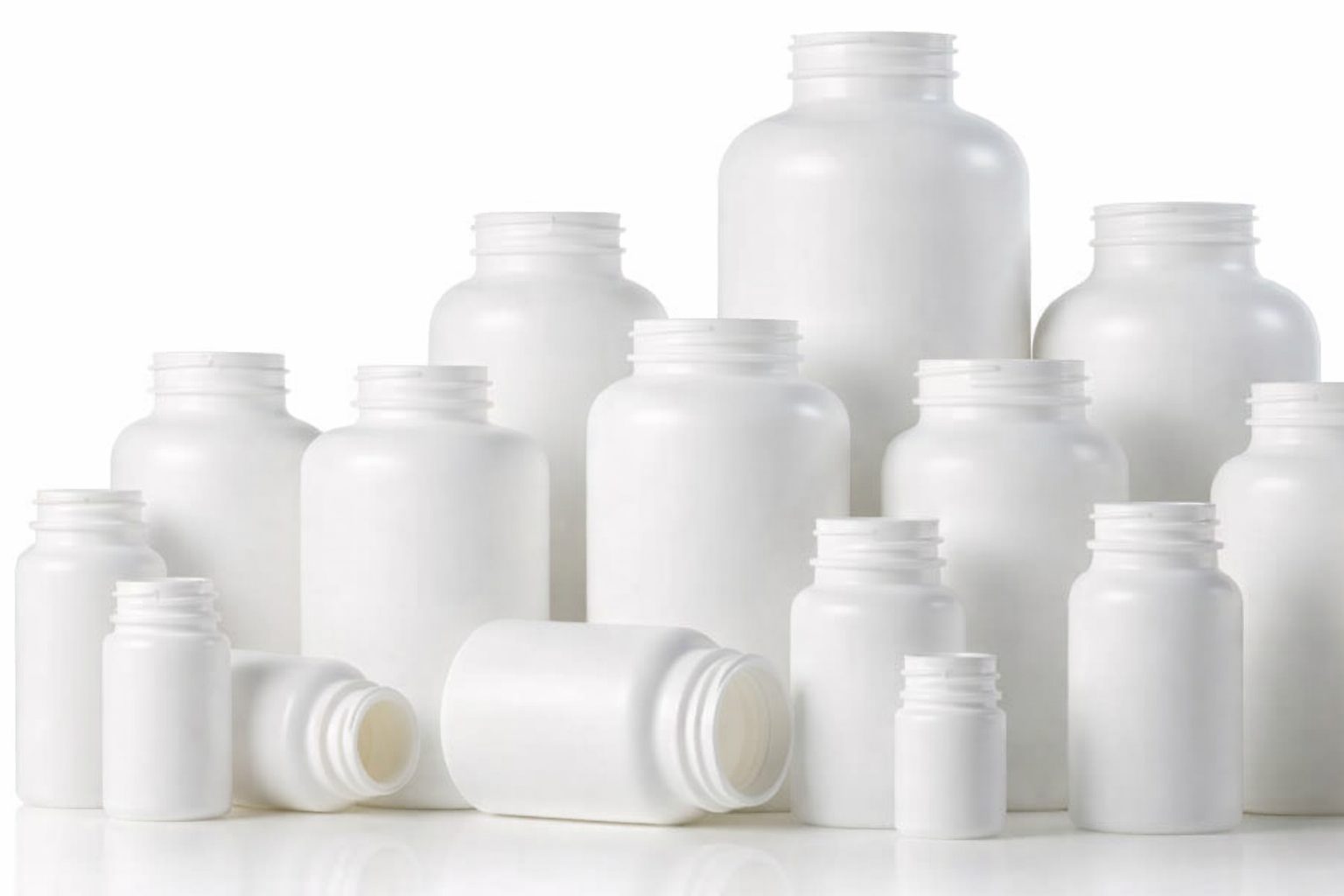
The nutraceutical segment has a quality problem that most manufacturers haven't fully quantified yet. Unlike pharma, it rarely faces post-market surveillance with the same regulatory rigour as drugs. Unlike FMCG, its defect consequences can be more serious than a label misprint. And unlike food, the product often sits in a supply chain that crosses three or four distributor hands before reaching the end consumer.
The result: machine vision for nutraceutical packaging inspection is both less deployed and more needed than in most comparable sectors. A missing induction seal on a fish oil capsule bottle isn't a cosmetic defect — it's a product integrity failure. A wrong label on a protein powder isn't a printing error — it could be an allergen risk. These aren't edge cases. They happen on high-speed lines running without 100% inspection.
This guide covers what needs to be inspected on a nutraceutical packaging line, which vision systems cover which check, and what the practical deployment looks like for plants in India targeting domestic compliance and export markets.
The Specific Challenges of Nutraceutical Packaging Lines
Nutraceutical packaging inspection is harder than standard FMCG packaging inspection for four reasons that matter to vision system selection:
- High SKU count and frequent changeovers. A typical nutraceutical manufacturer runs 40–120 SKUs across different product formats — tablets, capsules, powders, liquids — with weekly or daily changeovers. Vision systems need part programs for every SKU combination and fast changeover. Systems that require manual camera repositioning per changeover kill the ROI.
- Label complexity and variable data. Supplement labels carry lot numbers, expiry dates, batch codes, nutritional information panels, and regulatory certifications — all of which must be verified per pack. Camera resolution and OCR capability matters here more than in standard FMCG.
- Cap variety. Nutraceutical products use flip-top caps, child-resistant caps, continuous thread caps, pump dispensers, and induction-sealed variants — often within the same product range. A single cap inspection system must handle this variety.
- Induction seal as primary safety barrier. For most nutraceutical products, the induction seal is the primary barrier against contamination and tampering. It's not optional, it's not a cosmetic check, and it's not something AQL sampling reliably catches when a sealer starts drifting.
If you're exporting nutraceuticals to the EU, GCC, or the US, buyer requirements on packaging quality are typically more stringent than FSSAI domestic standards. Many EU-bound supplement shipments now require documented 100% inspection records for label accuracy and induction seal integrity before goods clear customs. Implementing vision inspection before entering export markets — not after a shipment is rejected — is the correct sequence.
What to Inspect on a Nutraceutical Packaging Line
A nutraceutical packaging line typically has three to five inspection points. Not all plants need all of them, but each covers a distinct failure mode that manual checking or AQL sampling will miss at production volumes.
1. Bottle/Container Inspection (Before Filling)
Before filling, check the empty container. Defects that enter the line empty propagate through to the filled, sealed, and labelled product — where they're harder and more expensive to catch.
- Crack or fracture in the bottle body or neck
- Contamination inside the container (foreign particle, black spot)
- Incorrect container type or size for the current SKU
- Sealing surface defect on the bottle neck (prevents induction seal adhesion)
2. Fill Level Inspection
Fill level inspection for nutraceuticals is more complex than for liquids — because many products are solid dosage forms (tablets, capsules, softgels) where "level" means tablet count via NIR level sensing or visible light imaging. For powder and liquid nutraceuticals, standard level cameras apply.
- Under-fill (fewer tablets than declared, or low liquid level)
- Over-fill (rare but creates dosage risk for controlled supplements)
- Mixed product in container (wrong tablets from adjacent run)
Running Nutraceuticals? Tell Us Your Inspection Gap.
Every line is different. Tell us your line speed, SKU count, and current QA pain points. We'll map the exact vision modules you need — without over-specifying.
3. Induction Seal Verification
This is the most critical inspection on most nutraceutical lines — and the most commonly done incorrectly. Many plants rely on a manual "tamper-check" at line end, or an AQL pull-and-inspect at the end of shift. Neither is adequate.
Induction seal failures come in several failure modes:
- Missing seal — the seal didn't apply at all (sealer malfunction, empty stack)
- Partial seal — only part of the seal adhered (bottle neck contamination, temperature dropout)
- Folded or wrinkled seal — seal applies but with a crease, compromising barrier integrity
- Seal lifted at edges — bond formed but weak, adhesion failure in storage or transit
- Wrong seal size — seal from a different product run left in the hopper
The Optomech ISIVS (Induction Seal Verification System) detects all five failure modes using near-infrared imaging through the capped bottle at line speed — up to 200 BPM. It doesn't require removing the cap. It works on opaque caps. And it generates a rejection signal directly to the line reject mechanism.
4. Cap Inspection
Cap inspection on nutraceutical lines covers three distinct check types that are often conflated but require different camera configurations:
- Presence and application quality — is the cap present, applied straight, and fully seated? A tilted or under-torqued cap won't show up on a seal check but creates a product integrity risk in distribution.
- Cap type and colour verification — is this the correct cap for this SKU? Wrong cap (wrong colour, wrong type) is a product identification failure — particularly critical in multi-SKU facilities.
- Cap defect inspection — crack, flash, insert missing (for child-resistant caps), liner presence check.
5. Label Inspection
Label inspection for nutraceuticals needs to go beyond "is the label present and straight." The regulatory content on a supplement label — particularly for export products — must be verified at the individual-pack level.
- Position verification — label within placement tolerance, not tilted or overlapping
- Product match — is this the correct label for this product (especially critical during changeover)
- Barcode and QR readability — scanner-verified, not just visually present
- Variable data verification — lot number, manufacturing date, expiry date correctly printed on this batch
- Print quality — no smearing, voids, or ink skip that makes text or barcodes unreadable
The Right Vision Modules for Each Inspection Point
Bottle Inspection System (BIS)
360° imaging of the bottle body, base, and neck. Detects cracks, contamination, sealing surface defects, and wrong container type. Runs at up to 200 BPM. Used before filling to reject defective containers before they enter the line.
View BIS Products →Induction Seal Verification (ISIVS)
Near-infrared imaging through capped bottle. Detects missing, partial, folded, and edge-lifted seals at up to 200 BPM. No cap removal required. Direct integration with line reject mechanism. Critical for nutraceutical export compliance.
View ISIVS →Cap Inspection System (CIS)
Top-view and side-view cameras verify cap presence, tilt, type, colour, and closure defects. Handles multiple cap types in same facility with program-driven changeover. Up to 300 BPM.
View CIS Products →Label Inspection System (LIS)
High-resolution cameras with OCR and barcode verification. Checks label position, product match, lot/expiry data, barcode readability, and print quality. Up to 250 BPM. Report output per pack for audit trail.
View LIS Products →What Most Plants Get Wrong: AQL Sampling Is Not a Substitute
This deserves a direct statement because it's the most common pushback from QA managers considering vision inspection: "Our AQL sampling at 0.65 catches defects fine."
It doesn't. Not for seal defects on a nutraceutical line. Here's why:
At 0.65 AQL, you inspect a sample of approximately 200 units from a lot of 10,000 (per ISO 2859-1, inspection level II). You accept the lot if 0 or 1 defective units are found. This means a lot with a 0.5% defect rate — 50 defective bottles in 10,000 — has roughly a 78% chance of passing AQL inspection and reaching distribution.
Fifty bottles with missing or compromised induction seals, cleared through AQL, shipped to 50 consumers.
A single induction seal verification system on a 150 BPM line costs less than one serious product recall. One nutraceutical recall in the GCC market — documentation, logistics, regulatory response, reputational cost — routinely exceeds ₹1 crore. One sealed customer complaint for allergen mislabelling has similar exposure. The ROI calculation for 100% vision inspection in nutraceuticals is not about reducing inspection labour — it's about eliminating the tail risk of catastrophic quality events.
Deploying Vision Inspection: A Practical Sequence
-
Start with the highest-risk checkpoint — induction seal verification. If your product is induction-sealed, this is the inspection that carries the most regulatory and consumer safety risk. Deploy ISIVS first, before any other vision module. You get 100% seal coverage from day one and the fastest payback on investment.
-
Add cap inspection for presence and tilt. Cap inspection is the second-fastest deployment and catches the second-most-common defect category — missing caps, tilted caps, and wrong cap types during changeover. Configure one part program per cap type in your facility.
-
Add label inspection with variable data verification. Label inspection has the longest setup time because OCR templates and barcode verification rules must be configured per SKU. Prioritise export SKUs first, then domestic compliance SKUs, then standard domestic products.
-
Configure changeover programs before you need them. The biggest deployment risk for multi-SKU facilities is changeover speed — operators skipping program selection under production pressure. Build changeover protocols into SOPs and validate each product program before it goes live on the line.
-
Generate inspection records automatically for audit trail. Export-facing quality systems increasingly require per-batch inspection reports with rejection data, pass/fail statistics, and timestamped records. Configure your LIS and ISIVS to generate these reports automatically — not manually from shift logs.
Warning Signs Your Nutraceutical Line Needs Vision Inspection
⚠ Export customer returning shipments for packaging defects
If shipments are being returned or held for cap, label, or seal defects, your current inspection process is not sufficient for export quality standards. 100% vision inspection is the baseline requirement for most international buyers.
⚠ Label changeover errors causing product mix-ups
Wrong label on wrong product is an allergen and compliance risk. If your labelling line does not have vision-verified product matching at changeover, this failure mode is a when, not an if.
⚠ Consumer complaints about unsealed or loose caps
Consumer complaints about seals and caps indicate that your sealer and capper are drifting and your AQL sampling isn't catching the drift. Online vision inspection at 100% would have caught these before they left the line.
⚠ Manual end-of-line inspection as your primary defect screen
At 150 BPM, a human inspector can reliably check approximately 30–40 attributes across 30–40 bottles per minute — less than 25% of output. The rest ships uninspected. On a nutraceutical line, that's not a quality system, it's a documentation exercise.
The Practical Takeaway
The nutraceutical sector in India is at an inflection point. Domestic regulatory pressure from FSSAI is increasing. Export market requirements — EU, GCC, US — are already stringent. And consumer awareness of product quality is rising faster than it has in any prior decade.
100% inline vision inspection is not a technology upgrade for nutraceutical manufacturers — it's a quality infrastructure requirement that the market is moving toward, whether individual manufacturers are ready for it or not. The plants that deploy it now build a quality data trail that differentiates them in export tenders and regulatory audits. The plants that wait deploy it reactively, after a quality incident has already occurred.
Contact Optomech with your line speed, cap type, bottle format, and top three quality pain points. Our applications team will identify the inspection modules that address your specific risk profile — without over-specifying systems you don't need. Contact: sales@optomech.in